





What Is The Function Of A Fully Automatic PP Cover Roll Sheet Slitting Machine?
 Nov 26, 2025|
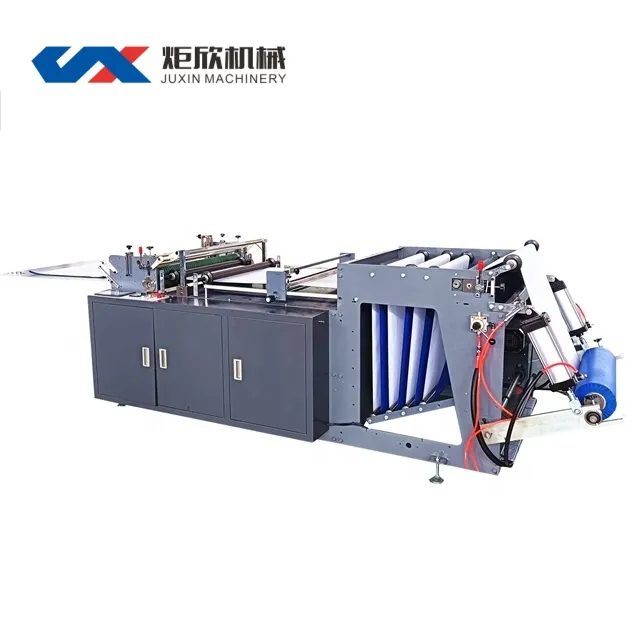
 The fully automatic PP roll sheet slitting machine is a kind of fully automatic sheet cutter designed for polypropylene roll sheets. Its core function is to optimize the production process, improve product quality and reduce overall cost while slitting the wide PP roller into a narrow roller with a specific width. Here's a look at its specific features and technical advantages:
I. Core Functions
Precise Slitting Width
The 6-8m wide PP master roll is divided into 10mm-2000mm narrow rolls to meet the needs of different industries:
Packaging industry: food packaging film, pharmaceutical packaging film slices;
Electronics: Precision slitting of capacitor film film, battery separator film film (e.g. PP capacitor film film sectioning width tolerance needs to be controlled to ±0.1mm);
Construction industry: waterproof coil, heat insulation films Customized slitting.
Technical support: a high-precision encoder and closed-loop control system were used to achieve ± 0.1mm (high-end models) sectional width tolerance, ensuring consistent dimensions.
Automatic Roll Diameter Control: Dynamic adjustment of coil diameter (e.g. special purpose equipment (e.g. printing press, laminating machine) using pneumatic sliding coil or four-axis automatic switching and winding system.
Strengths: Avoids manual adjustment errors and improve production continuity.
Edge Processing and Defect Removal: High-precision slitting: diamond coated blade or ultrasonic slitting technology to avoid burr caused by PP film fiberization, guarantee the bonding quality of subsequent lamination or coating processes.
Defect Removal: Integrated vision inspection system can identify and remove defects such as crystal points, bubbles and scratches on the surface of the film, and improve yield of the product (such as PP film yield after slicing up to over 99%).
High-Speed Slitting and automatic coiling: splicing speed: due to the soft, elongation of polypropylene film, slitting speeds can reach 800-1200m/min, greatly shortening delivery cycles.
Changeover Time: Rewinding time from master roll to finished roll can be reduced to less than 30 seconds to minimize downtime.
II. Technical Advantages
Precise Tension Control: low-tension slitting technology (e.g., 2-10 N/cm2), floating roller device, dynamic tension adjustment, preventing polypropylene film tensile deformation.
Application Scenarios: After sectioning, PE cling film must pass the friction coefficient (COF<0.3) and the slitting machine must ensure that there are no scratches on the surface. Similarly, polypropylene films require strict tension control control to avoid surface damage.
Optimized Blades and angle
Blade Selections: Use a sharp circular blade (hardness HRC60 or higher) or ultrasonic slitting to prevent adhesion.
Angle of cut: Blade tilt angle is adjusted to 30°-45° to reduce stress cracking at the edges, especially for high precision applications such as PP capacitor film.
Wrap-up Pressure Gradient Control: Prevent "hardcore" phenomena by using a gradual reduction in tension control, with the outer pressure lower than the inner pressure (for example, from 15N to 8N), to ensure the curl is neatly wound.
Intelligent and energy efficient design
AI Intelligent Slitting: machine learning Predicts tool wear cycle, automatically adjusts sectioning parameters and extends tool service life.
Energy-saving design: Servo motor slitting than traditional mechanical dispenser energy-saving 20-30%, reduced long-term operating costs.
 III. Application Scenarios and benefits
Industry scope
Packaging: PP sealant tape, food packaging film cutting strips;
Electronics: capacitor film, battery separators Precision machining;
New energy: New Energy: Slitting of lithium battery (dust-free environment required).
Cost and efficiency Improvementss
Labour costs: One automated slitting machine can replace 3 to5 workers, reducing waste caused by human error;
Material Utilization: The edge loss of PP films can be controlled to less 1.5%% by optimizing the blade arrangement (nested slitting).
Production Efficiency: Continuous operation capability increased by more than 30% to meet the needs of large-scale production.